Cal Murphy’s arrest
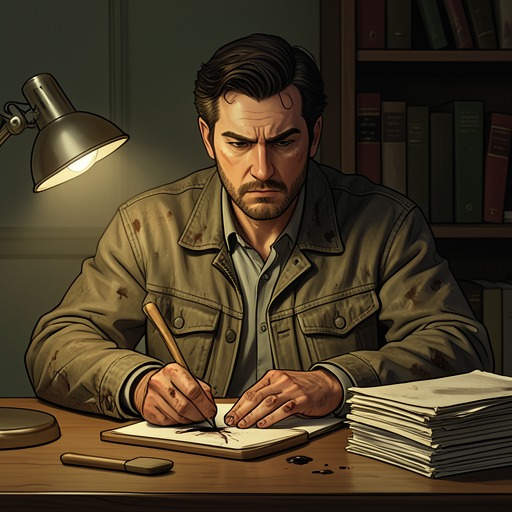
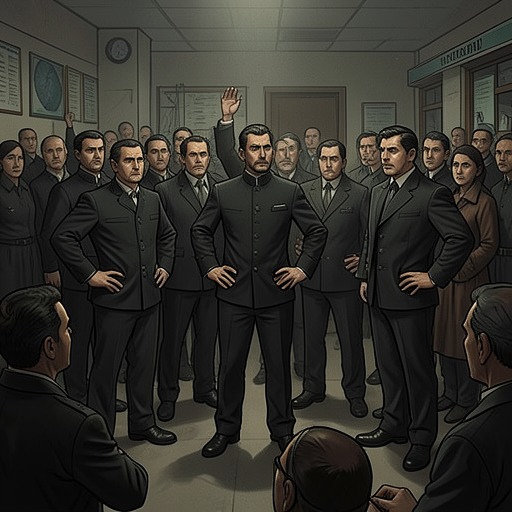
Dead ShotCal Murphy’s arrest marks the moment when Statenville’s effort to contain the three suspicious teenage deaths moves from guarded answers and editorial interference to overt legal intimidation. After Cal and Kelly Mendoza continue pursuing evidence, deputies meet Cal outside The Register with handcuffs and announce that he is under arrest. The charges are possession of an open container and driving under the influence, although Cal knows he had not been drinking and had not been driving with alcohol in his car. The arrest is therefore less a credible prosecution than a public demonstration that the town’s authorities can turn an investigator into an accused man.
Causes and Background
The arrest grows out of Cal and Kelly’s refusal to accept the official account of the deaths. Sheriff Jones identifies the third victim as Devin Reid, the son of Jim Reid, while insisting that the boys died from simple drug overdoses rather than murders. Jones acknowledges that methamphetamine was found at all three scenes but says toxicology reports will not return from Boise for at least two weeks. His version depends on naming the deaths before the available medical evidence can establish what happened.
That official story is already contradicted by the work of Kevin Mendoza. While examining Cody Murray’s body, Kevin sees extensive clawlike slashes across the torso, legs, arms, and face, with no part of the body left clear. He initially believes that the boys bled to death. When an unnamed authority orders him to state that they overdosed, cancel the toxicology screens, and submit a false report, Kevin complies publicly while keeping his original report beneath the new one on his clipboard. He also emails the Boise laboratory to cancel the victims’ blood tests. The arrest thus follows a broader struggle over evidence: the authorities are not merely denying Cal access to a story but actively reshaping the records through which the deaths might be understood.
Cal is also working against pressure inside The Register. Guy Thompson first orders him to visit the sheriff’s office, obtain whatever Sheriff Jones will provide, and report back, while directing him to keep Kelly with him for photographs and a dominant image for Wednesday’s paper. Once Cal continues digging, however, Guy says that nobody in town wants anything beyond funeral arrangements and flowers for the boys’ families. Later, Guy reassigns Cal to a reaction piece, reducing investigative reporting to a routine collection of public responses and crushing Cal’s hope of producing a major story. The arrest arrives within this atmosphere of controlled information, where official silence and editorial containment reinforce one another.
The Arrest
The immediate scene begins when Kelly Mendoza drives toward The Register and notices two deputy cars outside the entrance, their lights flashing. Jake Dawkins and Sheriff Jones lean against the cars, watching the street in her direction; after seeing her vehicle, they open their doors and speak into their radios. Kelly parks in the back lot, and Cal has barely set one foot on the gravel before Dawkins and Jones greet him with handcuffs. Sheriff Jones states that Cal Murphy is under arrest, making the confrontation feel prepared rather than incidental.
The arrest is especially coercive because Cal has just received a warning connected to the previous night’s events. The letter addresses him as an important ally, urges him to keep quiet and invent a cover story, and warns that learning what is happening in the community could put him at risk. It promises that information might eventually bring him national recognition, but threatens other forms of persuasion if he ignores the instruction. The letter also tells him not to show it to Kelly or Guy. Cal nevertheless decides to continue investigating and to use the reaction piece as cover. His arrest follows almost immediately, turning the warning’s abstract threat into a concrete loss of freedom.
The charges are described as trumped up. Cal understands that possession of an open alcohol container and driving under the influence would not withstand scrutiny in a real court, because he rarely drank and had not been driving with alcohol in the car the previous night. Within Statenville, however, the practical point is not legal durability. The charges provide a bureaucratic pretext for removing him from the street, discrediting him as a reporter, and signaling to others that investigation carries personal consequences.
Jail and Immediate Consequences
The Statenville jail intensifies the arrest’s humiliating character. It is little more than a holding cell: a ten-by-ten-foot space with a concrete-block wall, three sets of iron bars, water dripping from the ceiling, a dark stain in one corner, and no bed. A stainless-steel toilet is its only furnishing. Drifters and drunks usually remain there for no more than twenty-four hours before real criminals are transferred to Boise, and the town has not held a serious threat to its peaceful reputation for three years. Cal becomes the exception that exposes the jail’s larger function: a supposedly quiet civic space is suddenly used against someone whose questions threaten powerful interests.
Jake Dawkins books Cal, takes his mug shot, and mocks him throughout the process. Cal does not know whom he could hire as a lawyer, and Statenville’s limited attorneys are unavailable to him as meaningful options. The arrest therefore removes more than his immediate mobility. It cuts him off from professional resources and leaves him inside a local legal structure controlled by the same authorities whose account he is examining.
Cal believes he is helping Statenville by determining whether someone malicious is responsible for the deaths. From the cell, he realizes that the secret he is approaching may be more threatening to powerful people than he had understood. His physical confinement becomes a measure of the investigation’s stakes: the closer he comes to a hidden explanation, the less the town treats him as a citizen asking legitimate questions and the more it treats him as a problem to be contained.
Institutional Control and Later Relevance
The arrest belongs to a chain of discretionary decisions rather than standing apart as an isolated abuse. Sheriff Jones minimizes the deaths, supplies selected facts about methamphetamine, and withholds the unresolved toxicology. Kevin Mendoza is pressured to replace an autopsy conclusion with an overdose narrative. Guy Thompson attempts to redirect Cal from investigation to a reaction piece. Deputies then enforce a nominal traffic-and-alcohol violation at the exact moment Cal resumes his inquiry. Each decision can appear ordinary when viewed separately; together they create a system in which official labels displace physical evidence and administrative power narrows the range of permissible questions.
The same pattern later governs the pursuit of Cal and Kelly as fugitives. When Jake Dawkins and rookie deputy Willie Warren are sent to Walker’s house, Sheriff Jones initially describes the call as a disturbance, then tells Dawkins that the location holds Statenville’s most wanted fugitive, Cal Murphy. The reporters are again targeted through charges characterized as fabricated, while Warren approaches with his gun drawn despite having no reason to believe the situation is dangerous. The arrest therefore foreshadows a wider escalation from local intimidation to organized pursuit.
The event’s significance is finally measured against the reporting that follows. Cal’s story is later printed in two newspapers, showing that the arrest fails to erase the investigation even though it temporarily removes him from the newsroom and the streets. The mug shot, the false charges, and the cell are intended to make the reporter look like the offender; the eventual publication reverses that framing by returning attention to the deaths and to the institutions that tried to define them before the evidence could speak. As a narrative event, Cal Murphy’s arrest changes the central value from professional risk to immediate captivity, while confirming that Statenville’s most powerful defense is not a persuasive explanation but control over movement, records, and public perception.